<div class="bd">
<div class="content more_off" id="M201105_0_getProdTextInfo_P00a400020009_h2">
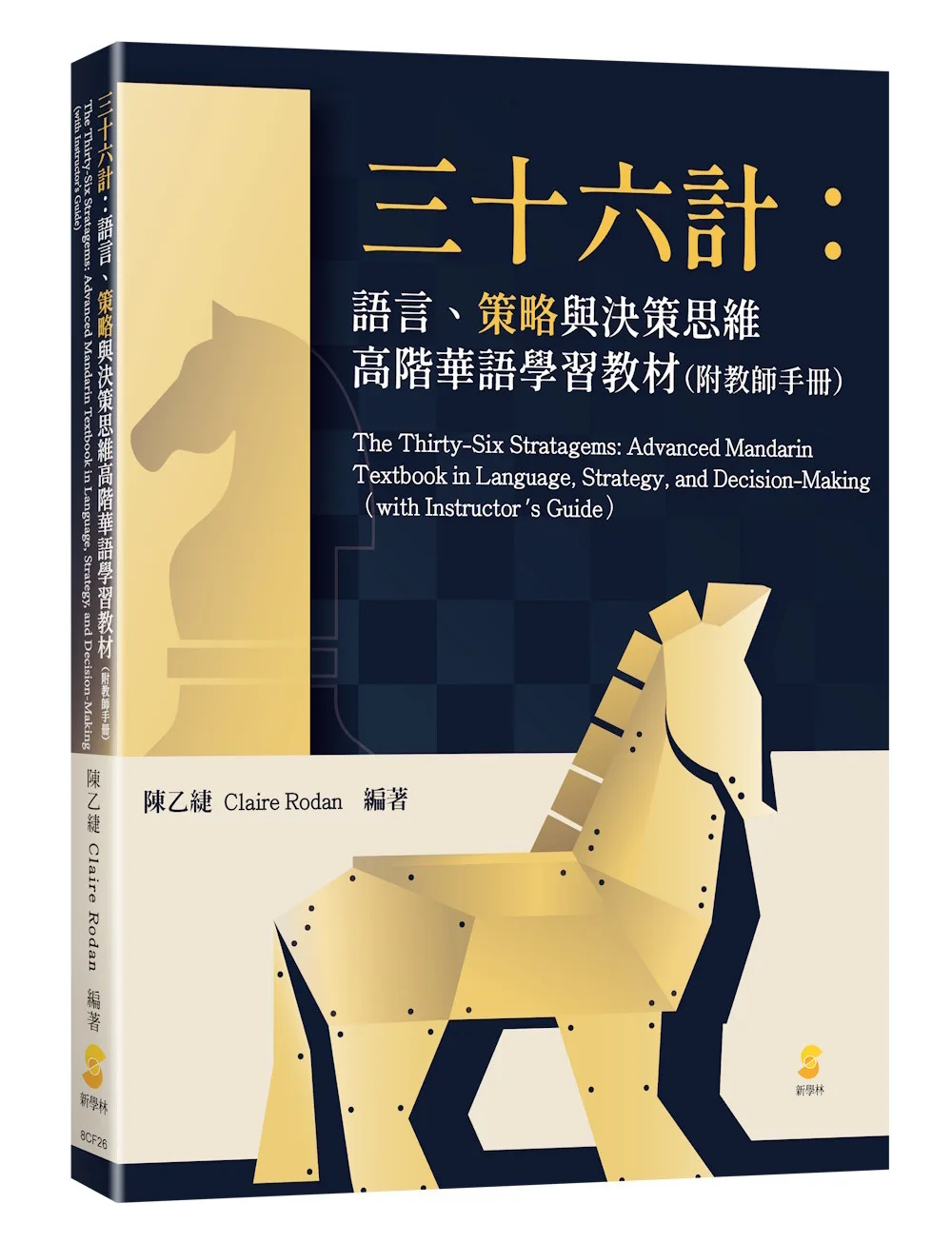
《三十六計》目錄<br>
The Thirty-Six Stratagems — Table of Contents<br>
?<br>
前言 PREFACE Ⅱ<br>
介紹 INTRODUCTION Ⅲ<br>
原文與卦象解析 CLASSICAL TEXT OF THE THIRTY-SIX STRATAGEMS Ⅴ<br>
第一章?勝戰計 Chapter I Winning Stratagems<br>
第二章?敵戰計 Chapter II Engagement Stratagems<br>
第三章?攻戰計 Chapter III Offensive Stratagems<br>
第四章?混戰計 Chapter IV Confusion Stratagems<br>
第五章?並戰計 Chapter V Consolidation Stratagems<br>
第六章?敗戰計 Chapter VI Survival Stratagems<br>
第七章?綜合複習練習 Chapter VII Comprehensive Review Practice<br>
附錄:教師手冊 INSTRUCTOR’S GUIDE?
</div>
序
<div class="bd">
<div class="content more_off" id="M201105_0_getProdTextInfo_P00a400020009_h3">
The <em>Thirty-Six Stratagems </em>(三十六計) occupies a distinctive place within the Chinese strategic tradition. Unlike <em>The Art of War</em>, which presents a relatively coherent theoretical framework attributed to a single author, this text emerges from a cumulative lineage. It consists of brief formulations that condense recurring patterns of action observed across historical practice.<br>
Early references to “thirty-six stratagems” function less as a fixed list than as a general expression for ingenuity in action. The phrase signals an approach grounded in flexibility, indirection, and the management of perception. The compilation in its present form likely took shape during the late imperial period, drawing on earlier military writings, historical anecdotes, and broader intellectual currents.<br>
The stratagems do not constitute a formal system. They do not prescribe procedures. Rather, the stratagems offer a repertoire of interpretive patterns to navigate complex situations. Each stratagem frames a way to recognize advantage, anticipate change, and act within uncertain conditions. If <em>The Art of War </em>articulates principles, the <em>Thirty-Six Stratagems </em>renders those principles visible in practice, often in indirect and unexpected forms.<br>
Each formulation is compressed, frequently metaphorical, and deliberately open. The formulations are not instructions to be followed, but structures to be read. Their emphasis falls on timing over force, positioning over display, and transformation over confrontation. Strategy, in this sense, does not begin with action. It begins with perception.<br>
Comparable strategies appear beyond the Chinese tradition. The classical account of the Trojan Horse provides a familiar case. Victory is secured not through direct assault, but through concealment and the reconfiguration of the field of action from within. The comparison is not exact, yet it clarifies a shared insight. Effective strategy depends as much on the shaping of conditions as on the deployment of force.<br>
The enduring significance of the <em>Thirty-Six Stratagems </em>lies in its attention to patterns that transcend any single historical moment. In contemporary environments marked by complexity and rapid change, strategic competence cannot rely on fixed solutions. It requires the capacity to read situations dynamically and to respond with precision. The stratagems offer a compact but generative framework for cultivating that capacity.
</div>