- 定價64.00元
-
8
折優惠:HK$51.2

|
|
|
|
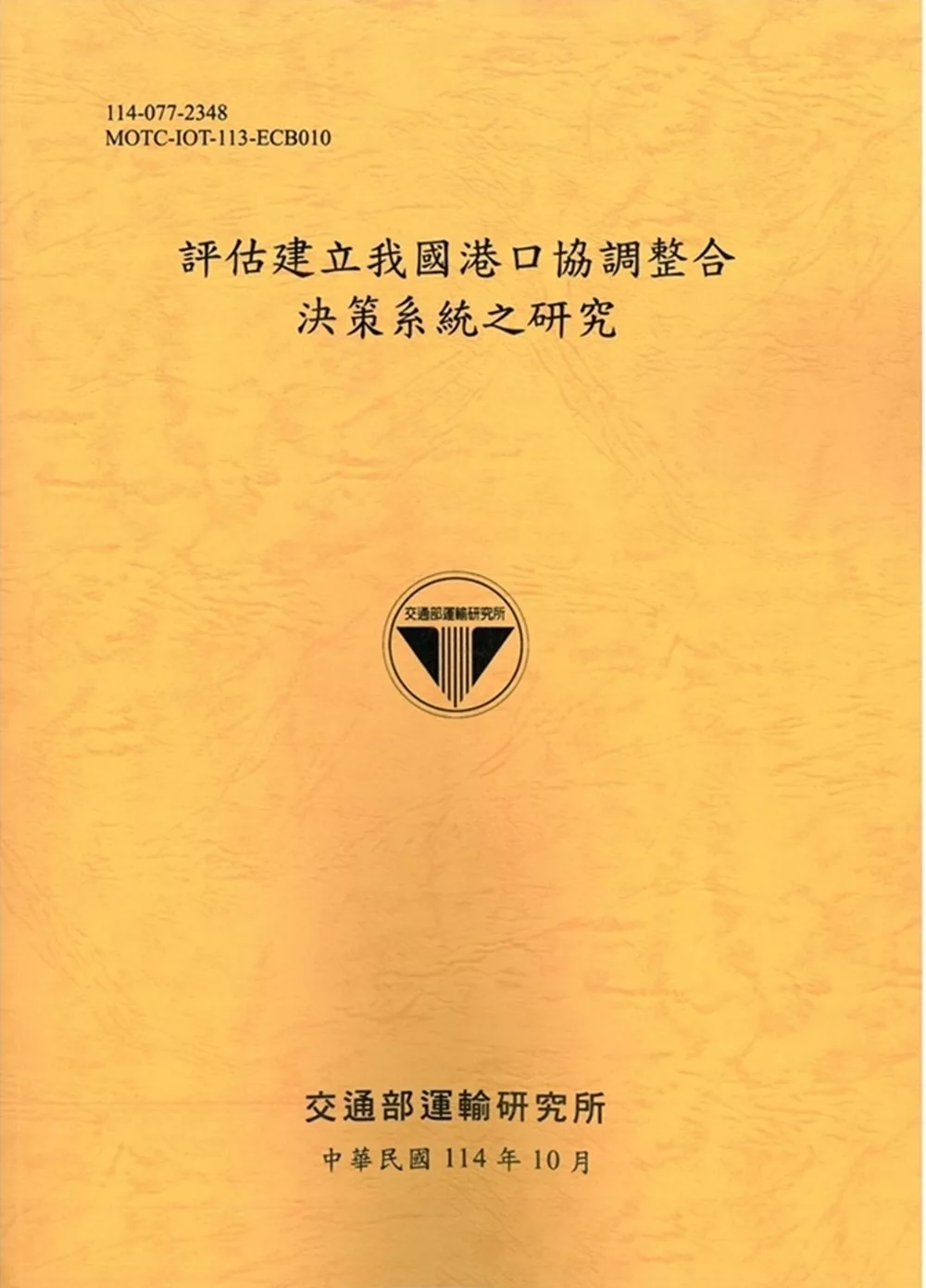
評估建立我國港口協調整合決策系統之研究
|
|
沒有庫存
訂購需時10-14天
|
|
|
|

|
|
9789865317096 | |
|

|
|
黃明居,盧華安,黃俊龍,李佩玟,張晏玲,曾鈺玲,陳榆,陳曄瑩,蘇美婷,賴威伸,許修豪,陳國輝 | |
|

|
|
交通部運輸研究所 | |
|

|
|
2025年10月01日
| |
|

|
|
90.00 元
| |
|

|
|
HK$ 81
|
|
|
|
|

| |
|
|
|
|
| |
|
|
詳
細
資
料
|
ISBN:9789865317096叢書系列:公共工程.交通規格:平裝 / 193頁 / 21 x 29.6 x 1 cm / 普通級 / 單色印刷 / 初版出版地:台灣 語文:中英對照
公共工程.交通
|
|
分
類
|
專業/教科書/政府出版品 > 政府出版品 > 交通/公共工程 > 公共工程 |
同
類
書
推
薦
|
|
|
內
容
簡
介
|
PortCDM為透過傳遞標準化資訊與即時共享資訊,有效提升船舶進出港過程之協作效率,減少等待時間及能源消耗,並進一步提升港口作業的可預測性與可靠性。本研究旨在評估我國建立PortCDM之可行性,探討如何透過提升資訊透明度與能見度,改善港口資源的使用效率,並藉由協助船舶調整航行速度來減少燃料消耗及碳排放。
首先透過文獻回顧,分析國外港口實施PortCDM之案例,了解其架構、推行方式以及影響其執行因素,提供臺灣發展PortCDM借鑑。本研究探討基隆港、臺中港及高雄港,藉由與各相關利害關係人之訪談,分析國內資訊共享現況以了解國內當前面臨之困難及相關利害關係人於資訊傳遞方面之需求,並且繪製我國港口資訊傳遞圖,標示船舶進出港之資訊傳遞狀態與重要資訊節點。
為評估測試PortCDM之可行性,根據國內港口資訊傳遞情況設計PortCDM案例模擬推播情境及相關問卷,邀請港口相關利害關係人參與測試,主動推播利害關係人所需之船舶即時進出港資訊至其通訊群組並透過問卷調查其意見。結果顯示,相關利害關係人認為測試模擬PortCDM在提升資訊透明度、提高預估資訊準確性和改善工作流程等方面具有效果,顯示國內具有發展PortCDM之可行性。
最後對我國發展PortCDM之推行策略提出建議,包含主導者與經費來源等並提出短、中、長期之發展期程以作為我國未來推動PortCDM之參考依據。
ABSTRACT:
PortCDM enhances the efficiency of collaboration during vessel port calls through standardized information exchange and real-time data sharing. It effectively reduces waiting times and energy consumption while improving the predictability and reliability of port operations. This study aims to assess the feasibility of establishing PortCDM in Taiwan, exploring how increased information transparency and visibility can optimize the utilization of port resources and assist vessels in adjusting sailing speeds to reduce fuel consumption and carbon emissions.
This study begins with a literature review, analyzing international cases of PortCDM implementation to understand their frameworks, implementation methods, and success factors, providing valuable insights for Taiwans development of PortCDM. This study then focuses on Keelung Port, Taichung Port, and Kaohsiung Port, conducting interviews with stakeholders to analyze the current state of information sharing, identify the challenges faced, and investigate stakeholders needs for information transmission. A Metro Map for Taiwan’s ports was developed, clearly illustrating the state of information transmission during vessel arrivals and departures. Additionally, key nodes and decision points were identified, serving as a foundational reference for the preliminary promotion of PortCDM in Taiwan.
To further validate the effectiveness of PortCDM, a simulation case was designed based on current domestic challenges. Stakeholders from Kaohsiung Port participated in the test, where dynamic information was delivered to them in a "real-time" and "proactive" manner. A questionnaire was used to evaluate participants experiences and the effectiveness of the simulation. The results indicate that stakeholders have strong demands for such a system and recognize the significant benefits of PortCDM in enhancing information transparency, improving predictive accuracy, and optimizing workflows. This indicates a high feasibility for the development of PortCDM in Taiwan.
Finally, based on the findings from the interviews and simulation, this study proposes specific recommendations for Taiwans future PortCDM implementation strategies, including leadership roles and funding sources. Furthermore, it outlines short-term, medium-term, and long-term development plans, providing a blueprint for promoting PortCDM in Taiwan and advancing smart port operations.
|
|
目
錄
|
目 錄 Ⅲ
圖目錄 Ⅶ
表目錄 Ⅸ
第一章 前言 1
1.1 計畫緣起與重要性 1
1.2 研究目的 2
1.3 研究方法 2
1.4 研究範圍與對象 3
1.5 計畫內容與工作項目 4
1.6 名詞定義 5
第二章 文獻回顧 7
2.1 A-CDM與PortCDM之概念 7
2.1.1 A-CDM 7
2.1.2 PortCDM 9
2.2 PortCDM之框架與應用 12
2.2.1 PortCDM之架構 12
2.2.2 船舶靠港訊息格式 14
2.2.3 PortCDM之應用 16
2.3 PortCDM之實證案例 18
2.3.1 PortCDM效益驗證 18
2.3.2 歐洲實施PortCDM之成效 18
2.3.3 歐洲實施PortCDM之應用程式工具 19
2.4 PortCDM KPI與成效評估 22
2.4.1 PortCDM KPI 22
2.4.2 PortCDM成效評估方法 23
2.5國內外港口單一入口網 24
2.5.1 國內單一入口網 25
2.5.2 國外單一入口網 28
2.6小結 34
第三章 我國船舶進出港資訊傳遞現況與分析 37
3.1 船舶進出港口流程 38
3.1.1 船舶進港流程 38
3.1.2 船舶出港流程 39
3.2資訊傳遞流程和方式 40
3.2.1 進港資訊傳遞 42
3.2.2 出港資訊傳遞 48
3.3 船舶進出港資訊交換現況分析 49
3.4 港口之差異分析 53
3.5 臺灣港口現況與歐洲各國執行PortCDM之差異 54
3.5.1 國內外資訊共享平臺之差異 54
3.5.2 臺灣港口的PortCDM成熟度等級 54
3.6 小結 56
第四章 相關利害關係人需求及SWOT分析 59
4.1 相關利害關係人即時資訊需求 59
4.1.1 港務公司 59
4.1.2 航商 60
4.1.3 裝卸公司 61
4.1.4 船務代理行 62
4.1.5 CIQS 63
4.1.6 引水人 64
4.2 即時資訊需求分析結果 65
4.3 臺灣港口推動PortCDM之SWOT分析 69
第五章 案例模擬與可行性評估 73
5.1 案例模擬設計與步驟 73
5.2 案例模擬實施後的回饋與分析 77
5.2.1 案例模擬後問卷設計 77
5.2.2 問卷回饋與分析 79
5.3 PortCDM於臺灣發展之挑戰 82
5.4 PortCDM於臺灣港口推動模式 84
5.4.1 推行設計原則 84
5.4.2 推行策略 85
5.4.3 發展期程 87
第六章 結論與建議 93
6.1 結論 93
6.2 建議 94
參考文獻 95
附件一:基隆港務分公司訪談紀錄 101
附件二:臺中港務分公司訪談紀錄 103
附件三:基隆港引水人辦事處訪談紀錄 105
附件四:萬海航運股份有限公司訪談紀錄 107
附件五:德隆裝卸股份有限公司訪談紀錄 109
附件六:高雄港貨櫃場訪談紀錄 111
附件七:高雄港船舶交通服務中心訪談紀錄 113
附件八:安舫船務代理有限公司訪談紀錄 115
附件九:陽明海運基隆總公司訪談紀錄 117
附件十:期中報告審查意見處理情形表 119
附件十一:CIQS訪談紀錄 135
附件十二:陽明海運高雄分公司訪談紀錄 137
附件十三:PortableCDM行動應用程式介紹 139
附件十四:系統模組雛型分享會會議紀錄 143
附件十五:專家學者座談會會議紀錄 145
附件十六:期末報告審查意見處理情形表 149
附件十七:論文發表 165
附件十八:期末審查簡報 167
附件十九:問卷內容 189
|
|
|
書
評
|
|
|
|
|