- 定價127.00元
-
8
折優惠:HK$101.6

|
|
|
|
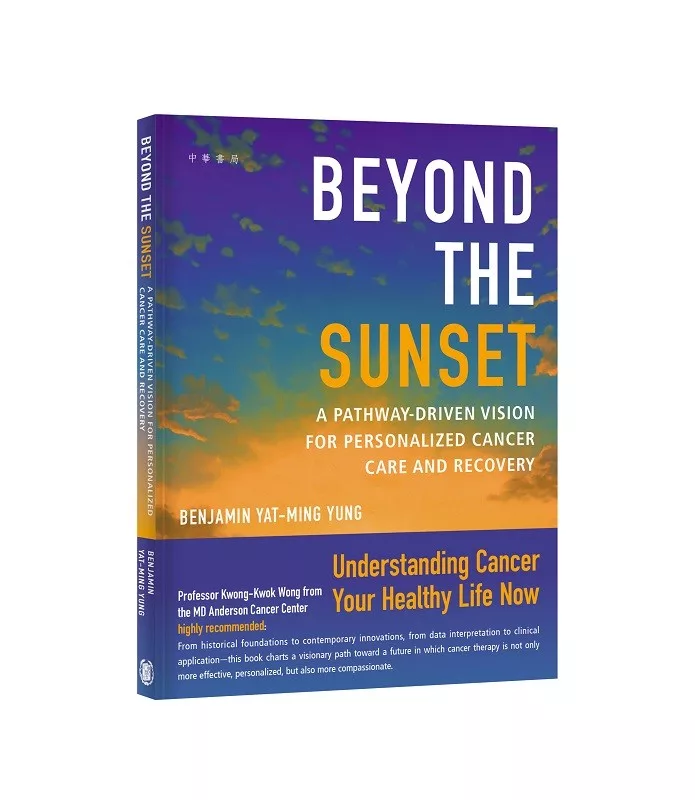
Beyond The Sunset:A Pathway-Driven Visio
|
|
沒有庫存
訂購需時10-14天
|
|
|
|

|
|
9789888958245 | |
|

|
|
BENJAMIN YAT-MING YUNG | |
|

|
|
中華書局 | |
|

|
|
2026年3月30日
| |
|

|
|
168.00 元
| |
|

|
|
HK$ 151.2
|
|
|
|
|

| |
|
|
|
|
| |
|
|
詳
細
資
料
|
ISBN:9789888958245規格:平裝 / 156頁 / 23 x 17 x 1 cm / 普通級 / 全彩印刷 / 初版出版地:香港
|
|
分
類
|
醫療保健 > 疾病百科 > 癌症專科 > |
同
類
書
推
薦
|
|
|
內
容
簡
介
|
Unlock Pathway Codes, Reshape Cancer Fight
Professor BENJAMIN YAT-MING YUNG, former Professor in the Department of Pharmacology at Chang Gung University College of Medicine, draws on forty years of accumulated research on NPM1/B23 to present the worlds first network model of cancer drug resistance and recurrence pathways.
This book breaks free from traditional therapy frameworks, delving into the four major characteristics of cancer to reveal the core pathogenesis of nucleolar imbalance and analyze the regulatory mechanisms of seven key pathway categories. The breakthrough QGCTR deconstructs personalized dysregulated pathways for patients, while providing pathway-based supplement applications and clinical solutions.
More than just a popular science introduction to cancer knowledge, it offers patients new directions in precision treatment and provides scientific prevention strategies for health-conscious individuals. By integrating cutting-edge science with personalized care, it transforms the arduous journey of fighting cancer into a clear, navigable path to recovery.
From historical foundations to contemporary innovations, from data interpretation to clinical application-this book charts a visionary path toward a future in which cancer therapy is not only more effective, personalized, but also more compassionate.
Professor Kwong-Kwok Wong, the MD Anderson Cancer Center
A testament to how an unwavering pursuit of scientific ideals, grounded in conviction and passion, can lead to transformative breakthroughs in medicine.
Yu-Sun Chang, Ph.D., Professor, Chang Gung University
This book represents the culmination of decades of thoughtful research and genuine care for cancer patients. It offers hope grounded in rigorous science—exactly what our field and our patients need.
Jason Lih, Ph.D., Vice President of R&D, Apeximmune Therapeutics?
|
|
目
錄
|
Foreword vi
Preface xvii
Mini Bio Lesson –A Quick Guide to Learn About Words Related to Cancer Biology 1
Chapter 1 Defining Cancer - A Disease Beyond Therapy
Historical Perspective of Cancer 20
Current Understanding of Cancer as a Systemic Disease 22
The Limitations of Traditional Cancer Therapies 25
Chapter 2 Four Major Characteristics of Cancer
Invasiveness 32
Metastasis 35
Heterogeneity 38
Resistance 41
Chapter 3 The Nucleolus – The Hidden Origin of Cancer
Overview of the Nucleolus in Cellular Biology 46
Nucleolar Dysfunction and Stress in Tumor Evolution 50
NPM1/B23 – A Key Player in Cancer Development 53
Why Nucleolar Balance Matters – A Prelude to NPM1’s Wider Impact 55
Chapter 4 NPM1 and Gene Co-expression Networks in Cancer
NPM1 as a Molecular Hub in Cancer Signaling 58
Gene Co-Expression Analysis in Cancer Progression 60
Identifying Potential Therapeutic Targets Through NPM1 Networks 63
Chapter 5 The QGCTR Model – A New Perspective on Cancer
Introduction to the QGCTR Model 66
Key Components and Pathways in QGCTR 68
Predicting Pathway Dysregulation Ranking for Individual Patients 71
Chapter 6 The Seven Key Pathway Classes – Shaping Cancer Phenotypes
Inflammation and Cytokine Response 74
Cellular Stress and Oxygen Response 76
Cellular Growth, Proliferation, and Survival 78
Angiogenesis and Tissue Remodeling 80
Metabolism and Lipid Signaling 82
Protein Homeostasis 84
Stemness, Differentiation, and Development 86
Chapter 7 Pathway-Based Supplements –A New Era in Supportive Therapy
Rationale Behind Developing A Pathway-Based Supplement 90
Comparison with Existing Cancer Supplements 92
Key Pathway-Targeted Ingredients and Their Mechanisms of Action 94
A Systems-Based Vision for Multi-Compound Integration 104
Chapter 8 Clinical Insights from QGCTR –Bridging Analysis and Possibility
Mapping Therapeutic Possibilities in Complex Cases 110
Informing Future Support Strategies Through Pathway Profiling 112
Long-Term Benefits of Targeting Cancer Pathways 115
Future Perspectives on Personalized Cancer Care 117
References 121
Tributes 133
|
|
序
|
In 2014, during a visit to Hong Kong, I had the distinct honor of being introduced to Professor Yung through a mutual colleague. Later that year, he and his research team visited Houston, where I had the privilege of hosting them and arranging a tour of the MD Anderson Cancer Center. During this visit, Professor Yung delivered a compelling seminar titled “A Multidisciplinary Research on Cancer and Its Metabolic Risk Factor: From Computational Characterization, Functional Discovery to Clinical Diagnostics Development.” His presentation was both intellectually rigorous and clinically insightful—an exemplary fusion of biochemical depth, computational sophistication, and translational relevance.
Now, more than a decade later, I am filled with admiration as I witness the culmination of Professor Yung’s enduring commitment to cancer research in this seminal volume. This publication transcends conventional scientific discourse. It stands as a testament to the transformative power of integrative research—serving as a beacon of hope for patients, a strategic guide for clinicians, and a source of inspiration for investigators navigating the complexities of cancer biology.
Professor Yung’s scholarly journey spans over four decades, beginning with foundational biochemical and genetic investigations into NPM1/B23—a multifunctional protein central to both physiological regulation and oncogenic processes. His research evolved to encompass computational analyses of NPM1/ B23 co-expressed genes, illuminating regulatory aberrations and delineating gene co-expression networks. This progression—from molecular characterization to computational modeling—has yielded a novel framework for understanding and addressing cancer pathogenesis.
His dedication to the study of NPM1/B23 culminated in the development of QGCTR, a proprietary computational architecture designed to extract clinically actionable insights from transcriptomic data. QGCTR represents a significant advancement in precision oncology, empowering clinicians to identify and prioritize functionally critical pathways that may underlie therapeutic resistance, disease recurrence, or treatment failure. QGCTR also introduces a paradigm shift: conceptualizing cancer as a network-based disease amenable to intervention through targeted disruption of its critical systems. This innovative perspective on supportive oncology care marks a promising evolution in the pursuit of holistic, patient-centered treatment strategies.
From historical foundations to contemporary innovations, from data interpretation to clinical application—this book charts a visionary path toward a future in which cancer therapy is not only more effective, personalized, but also more compassionate. It is with the utmost respect and enthusiasm that I commend this important work to the scientific and medical communities.
Kwong-Kwok Wong, Ph.D.
Professor
The University of Texas MD Anderson Cancer Center
|
|
|
書
評
|
|
|
|
|