- 定價227.00元
-
8
折優惠:HK$181.6

|
|
|
|
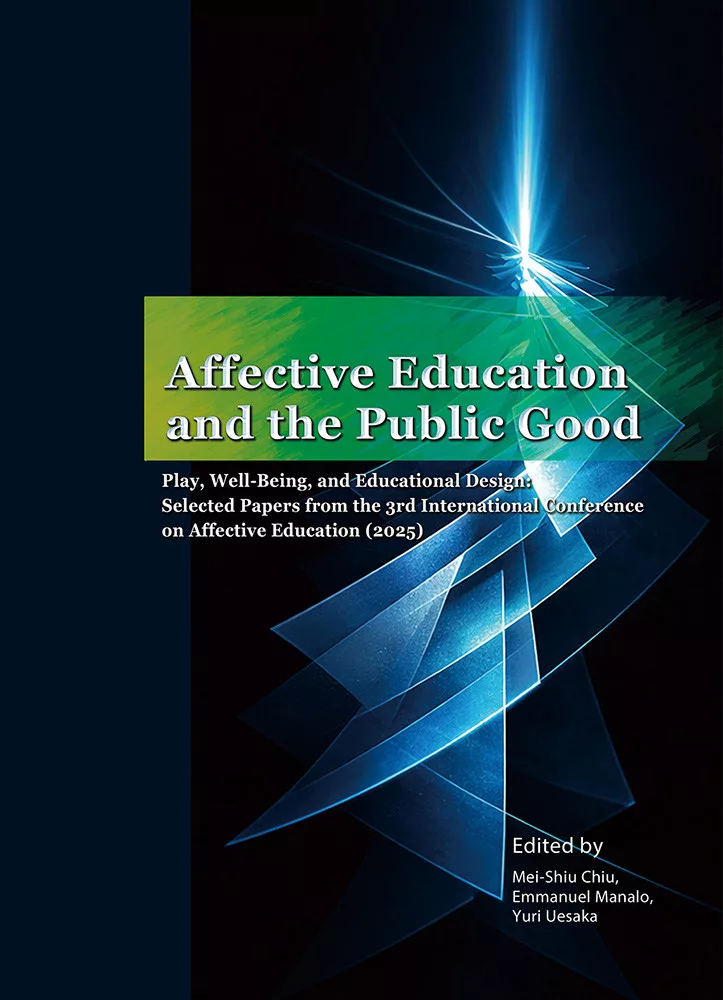
Affective Education and the Public Good-Play, Well-Being, and Educational Design:Selected Papers from the 3rd International Conference on Affective Education (2025)
|
|
沒有庫存
訂購需時10-14天
|
|
|
|

|
|
9789864472765 | |
|

|
|
Mei-Shiu Chiu,Emmanuel Manalo,Yuri Uesaka | |
|

|
|
華騰文化 | |
|

|
|
2026年5月20日
| |
|

|
|
107.00 元
| |
|

|
|
HK$ 96.3
|
|
|
|
|

| |
|
|
|
|
| |
|
|
詳
細
資
料
|
ISBN:9789864472765規格:平裝 / 230頁 / 19 x 26 x 1.6 cm / 普通級 / 單色印刷 / 初版出版地:台灣
|
|
分
類
|
專業/教科書/政府出版品 > 教育類 > 教育 > 教育專題 |
同
類
書
推
薦
|
|
|
內
容
簡
介
|
Key Features: Affective Education and the Public Good
1. Aligning with Global Visions: Integrating International Initiatives. Selected from ICAE3 2025, this volume addresses the global "happiness gap." Closely aligned with the OECD Education 2030/2040 Framework and UNESCO’s "Happy Schools" initiative, it moves Affect from the periphery to the center of pedagogy as an engine for collective resilience.
2. Rigorous Scholarly Transformation: Multi-Layered Review. Every chapter underwent two rounds of academic refinement: an initial blind peer-review for the conference, followed by a second round of anonymous expert review for selected authors. This ensures that the methodology, theoretical grounding, and logical structure meet the highest international standards.
3. Four Thematic Pillars: Mapping Educational Design
●Foundations: Ecological resilience and "the good life" in the age of AI.
●Interventions: STEAM education, "Gigo therapy" for ASD, and joy-infused mathematics.
●Technology: Utilizing WebVR and AI to reduce cognitive load and foster empathy.
●Professional Development: Cultivating resilience through role-play and Place-Based Learning.
4. Pioneering "Collective Mentoring" & Expert Editorship. The book embodies the "Collective Mentoring" spirit, bridging Generative AI with human empathy. It is edited by a transnational powerhouse: Mei-Shiu Chiu (National Chengchi University), Emmanuel Manalo (Kyoto University), and Yuri Uesaka (The University of Tokyo).
[Core Value] This volume proves that "Playful Design" and "Affective Engagement" are not extracurricular extras but the cornerstones of 21st-century educational design and the vital engines for the public good.
|
|
目
錄
|
Section 1: Foundations of Affective Education and Play
Chapter 1: Affective Education for the Public Good: Play, Technology, and Ecological Resilience
Chapter 2: Good Life as a Game in the AI Era: A Thinking–Feeling–Action–Wishing Perspective on Multi-dimensional Well-being
Chapter 3: Development and Empirical Analysis of a Generative AI Attitude Scale for University Students
Section 2: Play-Based Pedagogy and Inclusive Interventions
Chapter 4: The Impact of STEAM Playing Activities on the Well-Being of Preschool Children Aged 5-6 Years Old in Ho Chi Minh City
Chapter 5: Gigo Therapy as a Play-Based Intervention for Preschool Children with Autism Spectrum Disorder (ASD): A Single-Case Mixed-Methods Study
Chapter 6: When Mathematics Feels Fun: Affective Engagement in Learning Perimeter and Area
Chapter 7: Student-Centered Learning Curriculum Design: A Case Study of the Da Fei Xia Summer Program
Section 3: Playful Technology and Digital Interventions
Chapter 8: The 30-Second Stare: A Data-Driven WebVR Narrative on Noise Pollution
Chapter 9: Simulating the Living Dilemmas with Emotional Immersive Experience Design
Chapter 10: Designing Digital Well-being: A Framework for AI-Driven Adaptive Accessibility to Reduce Cognitive Load
Section 4: Cross-Context Play and Professional Development
Chapter 11: Cross-Disciplinary Experiential Tasks for Beginning Vietnamese Learners: A Self-Determination Theory Intervention
Chapter 12: Collaborative Self-Study of English-Medium Instruction: Reconstructing Multicultural Teaching Literacy in a Bilingual Context
Chapter 13: Role-Play Event Simulation in a Translation Class: Fostering Teamwork, Leadership, and Confidence among Korean Studies Students
Chapter 14: Designing Ecological Happiness Through Zoo- and History-Based Play
|
|
|
書
評
|
|
|
|
|