PREFACE
兵者,國之大事,死生之地,存亡之道,不可不察也。
軍事,是一個國家的重大事務,關乎生死存亡,不可不仔細研究。
War is the great matter of the state—the threshold between life and death, the path that leads either to survival or to ruin. It is a realm that demands vigilance, a doctrine that must be studied with unwavering care.
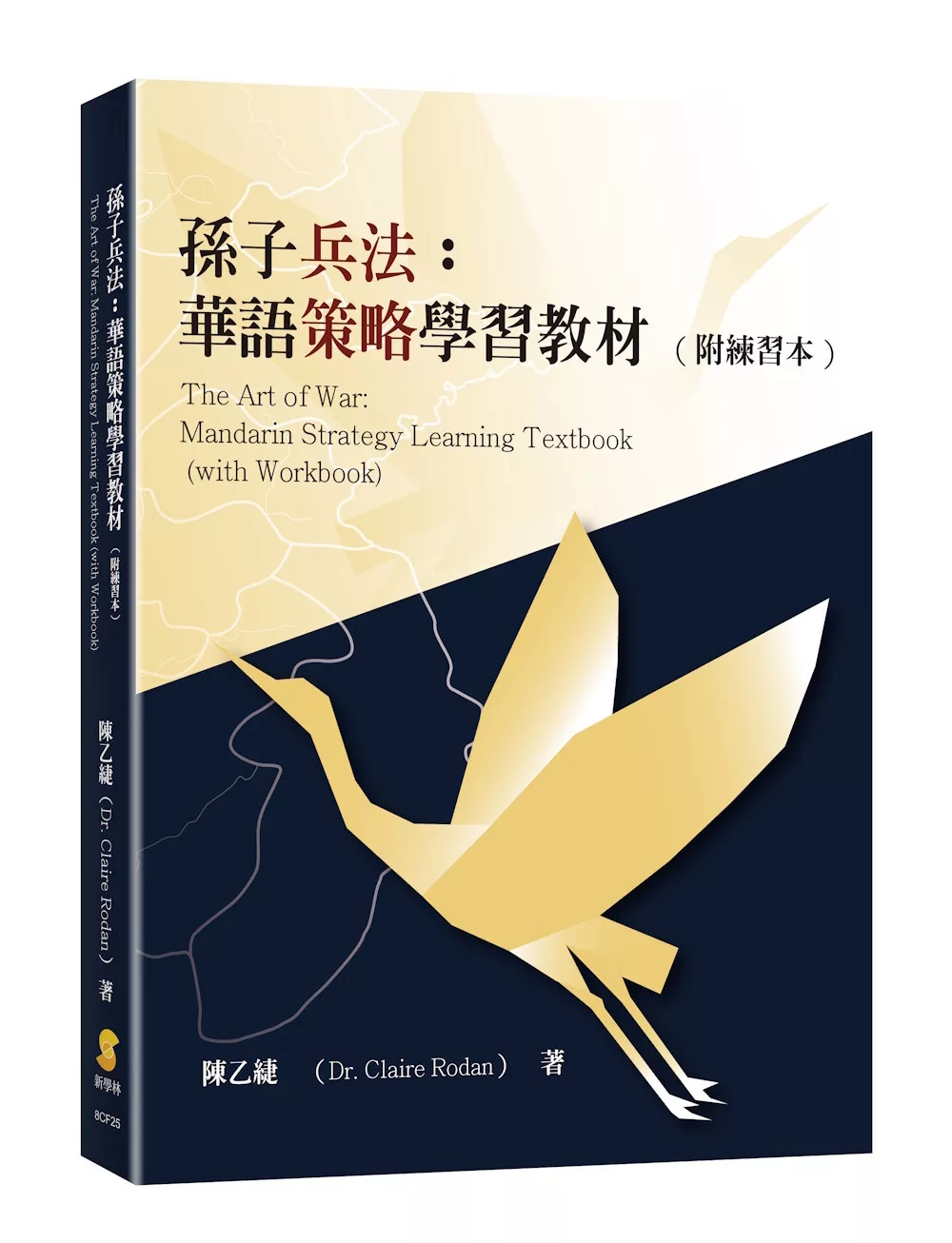
The Art of War by Sun Zi, composed around the fifth century BCE, stands as a foundational classic of Chinese military strategy and political philosophy. Its influence has extended far beyond the context of ancient warfare, shaping modern thinking in fields such as international relations, business management, intelligence studies, diplomacy, and personal leadership.
This volume is designed for learners at all levels of Chinese language study. It provides the original Classical Chinese text in both traditional and simplified characters, accompanied by modern Chinese translation, Pinyin transcription, and English rendering. This integrated structure supports a layered approach to learning, enhancing comprehension, translation ability, and sensitivity to linguistic nuance. By presenting Classical Chinese alongside its modern counterpart, the text illuminates the historical development of Chinese language and thought, offering valuable insight into the intellectual and cultural world of early China.
The strategic principles articulated by Sun Zi continue to inform contemporary geopolitical analysis, military planning, intelligence operations, and diplomatic practice. By situating The Art of War within a multidisciplinary framework, this edition encourages readers to understand the treatise not only as a historical document but also as a living body of strategic wisdom with enduring relevance. Such an approach enables nuanced interpretations of the original chapters and highlights their applicability to modern global challenges, conflict resolution, and strategic decision-making.
The side-by-side presentation of textual versions also facilitates close reading and comparative study, supporting scholarly work in history, philosophy, military science, and related fields. As you engage with this classic, we invite you to consider both its literal arguments and its broader implications. Sun Zi’s reflections on strategy, leadership, and the dynamics of conflict continue to resonate across cultures and centuries.
?
May this exploration deepen your understanding of Chinese culture and strategic thought, and inspire you to apply Sun Zi’s enduring insights within your own field of study or professional endeavors.
?
INTRODUCTION
Sun Zi’s The Art of War is universally acknowledged as a timeless military classic, offering insights into the nature of conflict, strategy, and victory. However, beneath the surface of its military guidance lies a deeper philosophy that, surprisingly, advocates for peace. Though Sun Zi recognizes the reality of warfare, he emphasizes that true victory is achieved not through bloodshed, but by subduing the enemy without engaging in direct combat. He asserts that avoiding unnecessary conflict is the ultimate form of wisdom.
Strategic evaluation, planning, adaptable leadership, and the judicious use of force are central to The Art of War. Sun Zi underscores the importance of deception, intelligence, timing, and an acute awareness of one’s strengths and weaknesses, as well as those of the adversary. He firmly believes that war should be seen as a last resort, one to be avoided or concluded swiftly in order to minimize harm to both parties. Sun Zi’s philosophy is one of efficiency, where the ultimate goal is achieved through strategic maneuvering rather than prolonged hostility.
The central message of the text is perhaps best captured in Sun Zi’s assertion that “The supreme art of war is to subdue the enemy without fighting.” He suggests that the highest form of warfare is the ability to accomplish one’s objectives while maintaining peace. This sentiment reflects a profound understanding of the destructive nature of war. He warns against prolonged conflict, which he views as ultimately detrimental to the nation’s resources, morale, and stability.
Throughout the chapters of The Art of War, Sun Zi advocates for a nuanced approach to conflict, one that emphasizes indirect tactics, the exploitation of an opponent’s weaknesses, and the use of intelligence. He is clear that victory does not necessarily require combat. By focusing on strategic advantage, the manipulation of circumstances, and understanding the opponent’s vulnerabilities, Sun Zi envisions a world where military force is deployed only when absolutely necessary, and even then, with the goal of minimizing destruction.
In a broader sense, Sun Zi’s principles resonate beyond military applications. They offer a philosophical framework for managing conflict, and risk, whether personal, political, or global. His teachings urge leaders to prioritize peace, to pursue non-confrontational solutions, and to be ever mindful of the costs of war. As such, The Art of War remains not only a manual for military strategy but also a profound treatise on leadership, wisdom, and the pursuit of peace.
In this modern age, where the threat of conflict looms large in global affairs, Sun Zi’s teachings provide invaluable guidance. His emphasis on strategy, intelligence, and the avoidance of unnecessary violence continues to offer insights for policymakers and leaders navigating complex and volatile geopolitical landscapes. Through the careful application of Sun Zi’s principles, it is possible to achieve not only military victory but also the preservation of peace, a goal that remains as relevant today as it was in Sun Zi’s time.
To modernize The Art of War in the context of contemporary warfare, the following key advancements and strategies reflect the rapid evolution of military technology, geopolitical dynamics, and strategic thinking:
1. Multi-Domain Operations (MDO)
The concept of MDO extends Sun Zi’s idea of attacking where the enemy is unprepared to new realms beyond land, sea, and air, including cyber and space. Military forces today must integrate efforts across all domains to exploit vulnerabilities and overwhelm adversaries, embodying Sun Tzus emphasis on flexibility and surprise.
2. Artificial Intelligence (AI) and Autonomous Systems
AI and Autonomous Systems transform decision-making and battlefield precision. Sun Zi’s principle of swift action aligns with AI’s ability to make real-time tactical decisions, while the ethical implications of autonomous warfare, such as accountability and compliance with international law, must also be considered.
3. Hybrid Warfare
Hybrid Warfare integrates conventional forces with irregular tactics, cyber attacks, economic sanctions, and disinformation campaigns. This blend of methods creates ambiguity, destabilizes adversaries, and prevents direct confrontation, reflecting Sun Zi’s strategy of exploiting weaknesses without full-scale military engagement.
4. Psychological Operations and Strategic Resilience
Psychological Operations and Strategic Resilience is vital in modern warfare, where manipulating public opinion through media and information campaigns becomes a central tool. In parallel, nations must build resilience within their societies and military forces, ensuring continued morale and the will to fight during prolonged or asymmetric conflicts, echoing Sun Zi’s focus on psychological advantage.
5. AI-Driven Logistics and Supply Chain Warfare
Optimizing military operations by ensuring timely resources, while simultaneously targeting the enemy’s supply lines, via cyber or physical means, cripples the enemy’s ability to wage war and follows Sun Zi’s strategic emphasis on resource management.
6. Warfare by Proxy
Warfare by Proxy is enhanced by modern technology, such as AI and cyber tools, which empower non-state actors to engage in conflict without direct state involvement. These proxies, which act autonomously and in decentralized ways, make it harder for enemies to retaliate effectively, aligning with Sun Zi’s preference for indirect methods.
7. Space and Anti-Satellite Warfare
Space and Anti-Satellite Warfare have become critical as control over space can disrupt communications and intelligence operations. Sun Zi’s teachings about terrain’s strategic value are directly applicable to the control of space, where adversaries can now challenge each other’s satellite systems through both cyber and physical means.
8. Non-Kinetic Warfare
Non-Kinetic Warfare, such as economic sanctions and trade wars, enables states to weaken their adversaries without engaging in military conflict, embodying Sun Zi’s strategy of minimizing bloodshed and achieving objectives through indirect means.
9. Swarming Tactics and Unmanned Systems
Swarming Tactics and Unmanned Systems modernize the concept of overwhelming force, where autonomous drones and unmanned systems can be deployed in large numbers to harass, confuse, and exhaust an enemy, consistent with Sun Zi’s focus on surprise and psychological impact.
?
10. Quantum Computing and Cryptography
Quantum Computing and Cryptography enhance the strategic role of intelligence and secrecy, allowing for highly secure communications and breaking enemy codes. This technological advance provides a significant edge in information warfare, enabling faster and more effective decision-making and surprise strikes, aligning with Sun Zi’s emphasis on maintaining secrecy and gaining advantages through intelligence.
Integrating these modern concepts into Sun Zi’s timeless strategies provides a comprehensive framework for navigating the complexities of contemporary warfare. With the integration of AI, multi-domain operations, hybrid tactics, and non-kinetic warfare, his teachings remain relevant and adaptable to the rapidly changing landscape of global conflict.
Dr. Claire Rodan